Avalon Advanced Materials Inc. (TSX: AVL) (OTCQB: AVLNF) is pleased to announce that it has signed a binding Letter of Intent ("LOI") with a private US company, Coal Strategy Advisors, LLC, ("CSA") to earn up to a 50% interest in the Will Scarlett Rare Earths Recovery Project ("Will Scarlett") located near Marion, Illinois. Will Scarlett is a closed coal mine site where recent geochemical sampling has found elevated levels of rare earth elements (or "REE") and other metallic elements such as cobalt, nickel, lithium, manganese and zinc in mine waste materials.
The rare earths are found at Will Scarlett in the acid mine drainage ("AMD") and in the precipitates generated from lime treatment of the AMD to neutralize the acidity. Sampling of the precipitates and AMD has revealed high concentrations of total rare earth oxides in excess of 500 ppm. Also notable is that, unlike most hardrock rare earth resources, no significant uranium or thorium has been detected associated with the rare earths at Will Scarlett.
The potential for economic recovery of rare earths from coal mine wastes and fly ash has been receiving a lot of study in the United States. This has accelerated recently with the introduction of new US government initiatives to reduce reliance on China as a source of these critical minerals. These unusual occurrences represent an interesting opportunity to create a new primary rare earths supply relatively quickly and at a low cost compared to typical hardrock resources. CSA has made application for funding being made available by the US government for new rare earth supply chain projects.
Avalon and CSA plan to proceed immediately with analytical and process testwork to confirm concentration levels and the most efficient extraction process to recover the rare earths from the AMD and precipitates. Once this is confirmed, a detailed budget for construction of a demonstration plant can be established which will then determine what the Company's share of costs will be to earn its interest in Will Scarlett. Initial analytical testwork is already in progress. Avalon and CSA will enter a formal joint venture agreement once the full scope of work required to advance the project to initial production is determined. Avalon will also be providing its technical expertise to help manage the exploration and development work at the site in collaboration with CSA.
Commented Avalon President and CEO, Don Bubar, "In our research to date on rare earths in coal mine wastes, Will Scarlett stands out as exceptional in terms of the levels of rare earths present in the AMD. Like our East Kemptville Tin Project in Nova Scotia, Will Scarlett provides Avalon with an opportunity to extract value out of previously-mined waste materials at a relatively low cost, and potentially fully remediate the long term environmental liability associated with acid mine drainage at the site."
About Avalon Advanced Materials Inc.
Avalon Advanced Materials Inc. is a Canadian mineral development company specializing in niche market metals and minerals with growing demand in new technology. The Company has three advanced stage projects, all 100%-owned, providing investors with exposure to lithium, tin and indium, as well as rare earth elements, tantalum, niobium, and zirconium. Avalon is currently focusing on developing its Separation Rapids Lithium Project, Kenora, ON and its East Kemptville Tin-Indium Project, Yarmouth, NS to production, while continuing to advance its Nechalacho Rare Earths asset. Social responsibility and environmental stewardship are corporate cornerstones.
Approvals for new coal mine construction in China have surged in 2019, government documents showed, with Beijing expecting consumption of the commodity to rise in the coming years even as it steps up its fight against smog and greenhouse gas emissions.
Long-term cuts in coal consumption are a key part of China’s energy, environment and climate goals, but the fivefold increase in new mine approvals in the first-half of 2019 suggests China’s targets still provide ample room for shorter-term growth. China’s energy regulator gave the go-ahead to build 141 million tons of new annual coal production capacity from January to June, compared to 25 million tons over the whole of last year, Reuters analysis of approval documents showed.
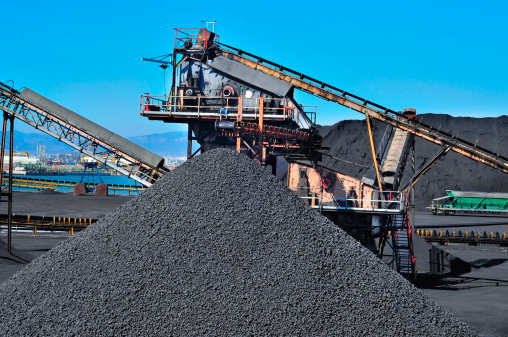
The projects included new mines in the regions of Inner Mongolia, Xinjiang, Shanxi and Shaanxi that are part of a national strategy to consolidate output at dedicated coal production “bases,” as well as expansions of existing collieries, the National Energy Administration (NEA) documents showed.
The NEA did not immediately respond to a request for comment. Beijing aims to raise the share of non-fossil fuels in its overall energy mix to 15% by the end of next year from around 14.3% currently, and to 20% by 2030. It cut the share of coal to 59% last year, down from 68.5% in 2012.
It has also promised to adopt the “highest possible ambition” when it reviews its climate change pledges next year, with one government think tank recommending China imposes a mandatory cap on coal consumption in its 2021-2025 five-year plan. But while smog-prone regions like Hebei and Beijing have already cut coal use and shut hundreds of small mines and power plants, China is still allowing for significant increases in coal production and coal-fired power generation.
That has piled pressure on utilities to use clean combustion technology. Lauri Myllyvirta, senior energy analyst with environmental group Greenpeace, said many of the newly approved projects would likely replace small or depleted old mines.
“However, it is alarming that China’s energy planning seems to be driving at roughly maintaining current levels of coal output for the coming decade or two, which is very hard to reconcile with the goal of the Paris agreement (on climate change),” he said. “Especially given that oil and gas consumption is still increasing, it’s imperative that coal use starts falling again after rebounding for the past three years.”
Chinese coal output rose 2.6% in the first-half of 2019 to 1.76 billion tons.
MORE TO COME?
Industry groups still expect coal-fired power capacity to increase over the next few years, with investments in nuclear and renewables still insufficient to cover rising energy demand. The research unit of the China State Grid Corporation last month forecast that total coal-fired capacity would peak at 1,230-1,350 gigawatts (GW), which would mean an increase of about 200-300 GW.
A study published earlier this year also suggested China’s targets would allow the construction of another 290 GW of coal-fired capacity in the coming years. China is convinced it can continue to raise coal production and consumption while significantly reducing emissions. It has made “ultra-low emissions” technology mandatory in all new coal power plants an is also improving mine zoning regulations to ensure pollution is minimized.
By the end of last year, 80% of total coal-fired power capacity had installed “ultra-low emissions” equipment, amounting to 810 GW, the government said. Michelle Manook, chief executive of the World Coal Association, an industry lobby group, told Reuters that coal remains a crucial element in the world’s transition to cleaner energy, and the focus should be on cutting emissions rather than banning coal entirely.
“It’s not about transitioning away from any one source of energy. it’s about transitioning to cleaner energy. And with investment, coal has a significant role,” she said.
