Eco-warriors are besotted with the myth that energy can be clean and renewable. The truth is that any "renewable" energy requires massive environmental impacts.
These impacts consume enormous amounts of environmental resources, which would make the most ardent environmentalist blush with shame if they only knew about them. Greens have so ensconced themselves in a humongous bubble of ignorance that it's doubtful if any but a handful know what I'm about to tell you.
And if that handful does in fact exist, they are keeping what they know to themselves as a closely held secret. Because if the truth got out, it would be the end of the environmental movement.
The vision of environmentalists is a peaceful, harmonious world in which human beings tool along on wind and solar energy alone, burn not an ounce of fossil fuel, and leave no human imprint on the environment at all. It's a beautiful, serene picture which has absolutely nothing to do with reality.
In this mythical world, the energy of the wind and the sun is captured and stored in batteries. There's your first problem, right there. As Mark Mills and Alexander Ackley write in The International Chronicles, "A single electric-car battery weighs about 1,000 pounds. Fabricating one requires digging up, moving and processing more 500,000 pounds of raw materials somewhere on the planet." If, however, you burned gasoline, you could deliver the same number of vehicle-miles over the battery's life span of seven years at 1/10 the total tonnage.
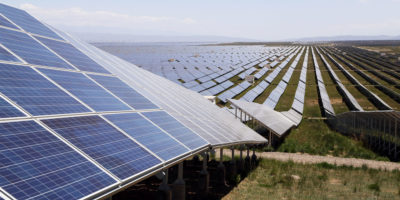
The green machines at some point must be decommissioned, which will generate millions and millions of tons of waste. By 2050, the International Renewable Energy Agency calculates that disposing of old solar panels alone will constitute more than double the tonnage of all today's global plastic waste. And waste is the word. A solar or wind farm that stretches as far as the eye can see can be replaced by a handful of gas-fired turbines, each about the size of a tractor trailer.
Both wind and solar require far more in the way of materials and land than fossil fuels. Just one wind turbine takes 900 tons of steel, 2500 tons of concrete, and 45 tons of plastic THAT CANNOT BE RECYCLED. Wind turbines last about 20 years, and since there is no way to recycle the materials, they have to be dumped in landfills. And with blades that are 120 feet long, they're too big for convenient disposal even there.
A wind farm in Minnesota trucked more than 100 of these monster blades to the Sioux Falls Sanitary Landfill in South Dakota. But the director of the Sioux Falls Public Works Department says they're done. "We can't take any more unless they process them before bringing them to us. We're using too many resources unloading them, driving over them a couple of times, and working them into the ground."
If a wind farm includes 100 turbines, that means there are 500 million pounds of concrete which has been poured into what used to be farmland. How is that concrete going to be disposed of?
There is not even a moderately inexpensive way to get the energy that wind farms generate to the cities which need them. Cities are built near flat farmland, while the wind blows on high ridge lines.
And there are health hazards to these giant bird blenders. Germany, which is shifting radically to wind, has discovered these wind farms produce so much noise that, according to one poor unfortunate soul, it "drives you insane at night." Germany is actually now paying hush money to people who live near these farms. They're getting direct handouts from the government essentially to keep quiet. So the turbines can keep making noise, but the people can't.
Building enough wind turbines to supply one-half the world's electricity needs would require nearly two billion tons of coal to make the concrete and steel, and two billion barrels of oil to make the composite blades. We'd consume immense amounts of hydrocarbons in a radically stupid attempt to avoid consuming hydrocarbons.
Well, at least that leaves solar as an environmentally friendly, sustainable, and renewable source of energy. Except of course for the MINING of silver and indium, which will jump 250% and 1200% respectively in the next several decades. Demand for rare earth minerals required for the manufacture of solar panels will rise 300% to 1000% by 2050 to meet the goals of the Paris Accords.
The production of electric cars will require a 2000% percent increase in the production of cobalt and lithium. This will require mining operations in remote wilderness areas with a high degree of undisturbed biodiversity, which is where the cobalt and lithium are found.
One of the dirty secrets is that wind farms must be heavily propped up with taxpayer subsidies because no one in his right mind would build one otherwise. Warren Buffet, for instance, owns MidAmerican Energy. Said Buffett, "On wind energy, we get a tax credit if we build a lot of wind farms. That's the only reason to build them. They don't make sense without the tax credit."
Engineers joke about discovering "unobtanium," a magical energy-producing element that "appears out of nowhere, requires no land, weighs nothing, and emits nothing."
Bottom line: "clean, renewable" energy is neither. It's an environmental disaster. Fossil fuels, on the other hand, are readily accessible, affordable, and have a much, much smaller environmental footprint than all renewables. Gentlemen, start your engines.
Because RE zealots crowed about Germany’s ‘inevitable transition’ to wind and solar from the outset, it’s no surprise that its disastrous conclusion is attracting attention, much like a freeway pileup.
Germany’s so-called Energiewende (energy transition) has turned into a power pricing and supply calamity. Which was as perfectly predictable as it was perfectly avoidable.
Jonathan Tennenbaum is one smart cookie. He received his PhD in mathematics from the University of California in 1973 at the tender age of 22. He’s also a physicist, linguist and pianist and the former editor of FUSION magazine, lives in Berlin and is a frequent visitor to Asia and elsewhere, consulting on economics, science and technology.
Jonathan reaches the inevitable conclusion that the ‘inevitable transition’ to wind and solar was a disaster just waiting to happen. And points out that the inevitable solution was staring Germans in the face all the time: nuclear power.
Germany’s overdose of renewable energy
Germany now generates over 35% of its yearly electricity consumption from wind and solar sources. Over 30 000 wind turbines have been built, with a total installed capacity of nearly 60 GW. Germany now has approximately 1.7 million solar power (photovoltaic) installations, with an installed capacity of 46 GW. This looks very impressive.
Unfortunately, most of the time the actual amount of electricity produced is only a fraction of the installed capacity. Worse, on “bad days” it can fall to nearly zero. In 2016 for example there were 52 nights with essentially no wind blowing in the country. No Sun, no wind. Even taking “better days” into account, the average electricity output of wind and solar energy installations in Germany amounts to only about 17% of the installed capacity.

The obvious lesson is: if you want a stable, secure electricity supply, then you will need reserve, or backup sources of electricity which can be activated on more or less short notice to fill the gaps between electricity demand and the fluctuating output from wind and solar sources.
The more wind and solar energy a nation decides to generate, the more backup capacity it will require. On “bad days” these backup sources must be able to supply up to 100% of the nation’s electricity demand. On “good days” (or during “good hours”) the backup sources will be used less, or even turned off, so that their capacity utilization will also be poor. Not very good economics.
Much better would be to limit wind and solar to a relative minimum, and rely instead upon controllable, non-fluctuating power sources operating with a high capacity factor, to meet the nation’s base load electricity requirements and to adjust total output in accordance with varying demand. This corresponds to world-wide practice prior to the recent huge buildup with renewable energy.
In theory the ideal backup for wind and solar energy would be to store excess electricity produced when the Sun is shining and strong winds are blowing, and inject it back into the grid when needed. Unfortunately, electricity is a difficult and expensive commodity to store.
By far the most efficient presently available solution for storing excess electric power is to use it to pump water against gravity into a reservoir. When electricity is needed again, it is produced by letting water flow down again via a turbine generator. In this process about 25% of the energy is lost.
Naturally, the costs of construction and operation of such pump storage plants will add to the real costs of providing electricity. Plus, these installations use up a large amount of land area.
Here, too, Germany provides an instructive example. A 2014 study by the Bavarian Ministry of Energy came to the conclusion that pump storage plants were not an economically viable solution. Much better would be to exploit already existing water reservoir resources in Norway and Sweden, where the capacity of pump storage plants can be greatly expanded and new ones built at much lower cost.
This “solution,” however, would require transporting large amounts of electricity over long distances back and forth between Germany and those countries – which in turn would require additional high-voltage lines and cables that have not been built and that no one wants to pay for.
Given the high costs and other obstacles to creating large electricity storage systems, it is not surprising that Germany’s electricity storage capacity amounts today to less than 2% of total electricity output.
There has been much discussion and research concerning alternative ways to store electricity. Theoretically one could be to use excess power to produce hydrogen, store it somehow and then use fuel cells to generate electricity back from the hydrogen. This would be vastly more expensive than pump storage, however, and with much greater losses.
Overdose of renewables?
Today, in order to guarantee stable baseline power and fill the gaps left by its fluctuating wind and solar generators, Germany is forced to rely on (1) CO2-spouting coal and natural gas power plants; (2) its remaining handful of nuclear plants, which it plans to shut down by 2022; and most notably (3) importing electricity from other European nations.
On “good days” Germany floods the rest of Europe with excess power from its wind and solar installations, often at dumping or even negative prices. In this way Germany has turned its huge amounts of wildly fluctuating renewable power sources into a European-wide problem.
Even with the flourishing European electricity trade, however, Germany is still far from being able to close down its coal and gas power plants.
The German Energy Agency (DENA) published a long-term scenario for electricity production in Germany, based on the assumption that so-called renewable sources should account for 80% of total electricity consumption by the year 2050.
Among other things DENA concluded that in order to insure a stable electricity supply, Germany would still need to maintain 61 gigawatts of conventional power plant capacity “in reserve” and for a remaining portion of base-load production. Electricity storage systems would provide only 9% of reserve capacity in 2050.
Despite – and to a large extent because of — the massive expansion of renewables, conventional power capacity could only be reduced by 14% up to 2030 and by a maximum of 37% by 2050.
Given the government’s commitment to shut down nuclear energy in Germany, this would mean keeping a large reserve of CO2 -emitting, fossil fuel-based generation capacity. At the same time the political decision has been made to phase out the coal-power stations which up to now have produced the largest part of Germany’s electricity.
That leaves essentially only petroleum (heating oil) and natural gas as realistic fuels for backup power. Natural gas would take first place because it generates about 50% less CO2 per kWh of electricity than coal or petroleum-powered plants.
With this background one can appreciate the German government’s concern to guarantee long-term supplies of natural gas at stable prices. Hence also the government’s insistence on the North Stream 2 project to build a system of offshore natural gas pipelines from Russia to Germany.
The good news, so to speak, is that for most of the time the backup plants would operate at only a fraction of their installed capacity, with many even standing still on “good days.” That way they would release much less CO2 to the atmosphere.
That’s nice for the environment, but not a very efficient way to utilize equipment, infrastructure and manpower – and not very attractive for investors. Also it’s still far from the green dream of a CO2-free energy system.
Preserving the stability of Germany’s electricity grid while at the same time integrating tens of thousands of fluctuating energy sources distributed over the entire country has been a major technical challenge. It has meant reorganizing much of the electricity transmission and distribution system, which was designed and built to operate in a completely different regime.
It means also the construction of thousands of kilometers of new high-voltage lines, including four projected long-distance transmission lines which are needed to move electricity from the windy north to the industrial west and south of the country. This again adds to the real (systemic) costs of supplying the country with electricity.
There is no doubt that the attempted transition to renewable sources as the foundation of Germany’s energy system – Angela Merkel’s famous “Energiewende” – has already significantly reduced the country’s economic efficiency. The constantly rising electricity prices, taxes and levies only begin to reflect the true costs of the government’s policy. There is also a debate concerning the future stability of the electricity grid.
Merkel and others often argue that a successful “Energiewende” would place Germany in a unique position to export know-how and technology for the ongoing “green transformation” of the world economy. Increased income from export of green technology is supposed to compensate for the costs of the Energiewende. This calculation assumes that the other countries will choose to follow the radical German example in reorganizing their power sectors, which is doubtful.
Meanwhile resistance has been growing inside Germany itself, as local environmental groups and citizens’ initiatives mobilize to block construction of wind turbines, transmission lines, pump power stations and other renewable energy projects.
The environmentalist ideology is coming into contradiction with itself. The unprecedented scale of destruction of the natural landscape by 30,000 gigantic wind turbines has brought a growing realization, that reliance on renewable energy is by no means friendly to the environment – and not necessarily safe.
People don’t want to live near wind turbines, because of unpleasant noise and possibly dangerous infrasound emissions, disturbing optical effects, reports of fires, broken-off turbine blades flying through the air, ice throws, etc. And the dead birds.
In Germany there is political pressure to increase the legally-set minimum for the distance between wind turbines and houses to 1 or even 1.5 kilometers, which would drastically reduce the availability of construction sites. Already, protests and law suits have brought the construction of new wind turbines in Germany to a near-standstill.
Solar energy has encountered much less resistance, no doubt to a large extent because only a few large solar farms have been built in the country. Most of the present capacity comes from roof-mounted solar cells, especially on private houses, where they have become quite popular.
The big problem is how to store the electricity, which is generated only during daylight hours and fluctuates according to the cloud cover. So far relatively few house owners have been willing to pay for batteries and other storage devices. Instead, excess electricity is taken up by the grid at a subsidized price.
Projects for pump storage stations, and for new transmission lines have met with such intense resistance, that there is little chance of fulfilling the original goals of the Energiewende.
The question is, whether it makes sense at all to depart from the tried-and-proven model of a stable electricity system based on continuously functioning sources, a large percentage operating in base load mode.